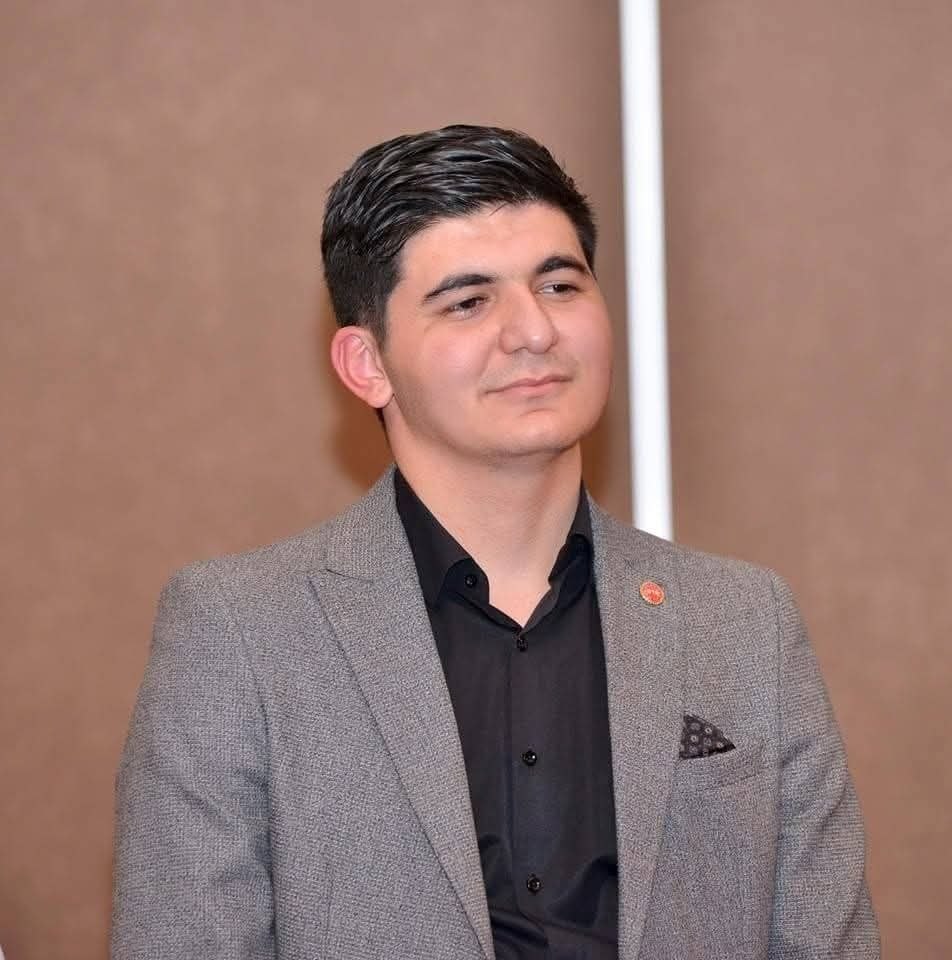
I grew up in a remote village in the Jalilabad region. Since I first opened my eyes, I have been a first-hand witness to illegal acts and lawlessness in our village. It pained my heart to watch the rural population being crushed in the vice of social inequality. The people's silence toward these events fueled my anger even more. The seizure of villagers' lands, unemployment, and their ignorance of fundamental rights had dragged them into such a swamp that they were pulling their families down with them. The high-profile early marriages often reported in the media today were a common occurrence in our village and the surrounding areas.
While studying at university, I interacted with students from other regions and realized that our village, Jangan, is a miniature model of our 86.6 thousand square kilometer country. Without collective struggle, neither our village nor our country will ever improve. Together with like-minded students, we organized and stood against political discrimination, bribery, and the policy of "mankurtization" (cultural alienation) in education, founding a student movement called the Student Power Center. Parallel to this movement, I joined the Democracy 1918 Movement to play an active role in the country's political life. Alongside my fellow students, we defended student rights and held protests. These actions certainly had an impact. However, for a fundamental solution to these problems, a systemic change was essential.
My comrades-in-arms were young people with stories similar to mine. As we expanded the activities of the student movement, the pressure increased proportionally. This pressure was not only directed at us but also extended to our parents. In 2021, my father was held hostage at the regional police department for several hours to prevent me from attending a protest. I was repeatedly subjected to torture, pressure, and threats. They even went as far as threatening me with expulsion from the university. Since the political environment was slightly different a few years ago, there were still some opportunities for socio-political activity. Therefore, after graduating and completing my student life, I became more active in the political sphere and was elected chairman of the Democracy 1918 Movement in 2021. As my activities became more prominent, the severity of the repressions intensified.
The pressure and torture were on the verge of turning into a wave of arrests, and that is exactly what happened. In 2022, I was imprisoned for 30 days for making a call for peace during the military clashes between Azerbaijan and Armenia. My admission documents for master's studies abroad were declared "fake," a travel ban was imposed on me, and I was evicted from both my workplace and my rented apartment. Despite the criminal case opened against me to prevent me from leaving the country, no evidence was ever presented.
At the end of March 2025, I learned at the airport that the Prosecutor General's Office had once again imposed a travel ban on me. I was arrested 38 days after that incident. During that time, I felt I was being followed. Thus, it is no coincidence that the "victim" used as a tool to frame me and one false witness lived only a few kilometers away from where I resided. They even rented apartments in the same building. I have no doubt that these individuals were given their instructions long before my arrest.
On the night of May 6, 2025, while I was returning home in a taxi, these police agents who showed "extraordinary activity" at the "crime scene" while I was already tied up in the taxi played a zealous role in the physical torture inflicted upon me. The crime scene was cordoned off before my eyes; while I was in the handcuffed police car, I watched the "short film" unfolding outside the window. Within 10 minutes, the tapes were drawn, the police investigator picked up the knife he himself had planted and put it in the evidence box, and an ambulance which usually fails to arrive for hours when people are dying arrived in 5 minutes to triumphantly carry away Vugar Dunyamaliyev, the man I allegedly stabbed.
The first part of the film ended, and civilian and official police vehicles set off to begin the second part. At the Binagadi District Police Department, they first demanded my phone password and then required me to answer their questions exactly as they wanted. When I refused and demanded my lawyer, they struck me in the eyes, neck, head, and various parts of my body. When I did not submit, they used electric shocks on different parts of my body. I still did not answer, and after a while, due to the blows to my eye, the floor turned into a pool of blood and I lost consciousness. Before I fainted, they hit me with a baseball bat and broke my tooth. When I opened my eyes, the investigator was trying to revive me by holding ammonia to my nose. Apparently, fearing that I might die, they had dragged me into the investigator’s office.
Two days later, the judge of the Binagadi District Court, following the instructions of the investigator and the department that arrested me, quietly ordered a 4-month pretrial detention. During that court process, I declared that my arrest and the gravity of the charges were a violation a "rape"of Themis, who holds the scales of justice. Neither during the preliminary investigation nor the trial were any of my fingerprints found on the knife, which constitutes the main motive of the fake criminal case and the alleged weapon of "attempted murder." If it were anyone else, the case would have been dismissed even during the preliminary investigation; normally, a court must acquit the accused in such circumstances. Yet, I have been held in this condition for 10 months.
Furthermore, there were contradictory witness statements; even the two police officers called as witnesses clearly stated, "We did not witness Ahmed Mammadli stabbing anyone." A witness living near the scene stated that he was stopped by the precinct chief while simply going home and was forced by the investigator to sign a statement he had not read. Simultaneously, the court rejected our motions for camera footage of incriminating importance, medical surgery footage of the "victim," and other evidence that would have demolished the prosecution's case.
Do you think there is still a need for an explanation to see that this case is a political order? To understand that my human rights and journalistic activities which troubled the government in the six months leading up to my arrest were part of a long-delayed plan, all one needs is two eyes, two ears, and a basic level of common sense.
Finally, I would like to thank everyone who defended me during this period of unjust imprisonment!
EVERYTHING WILL BE FINE ONE DAY, BUT ONLY AFTER EVERYTHING HAS BEEN TERRIBLE...